People are talking about you long before they’re talking to you.
There was a time when LinkedIn was still trying to figure out what it wanted to be.
The platform was encouraging professionals to publish long-form articles, and I remember thinking there was something bigger on the horizon. Rather than posting occasionally, I committed to writing every single day. I kept that pace for well over a year.
I don’t say that because I think I was a genius. I simply recognized an opportunity, stayed consistent, and rode the wave. Over time, that consistency grew into a community of more than 225,000 followers and opened doors I never could have predicted.
Something else happened that was equally interesting.
If you Googled my name back then, the first several pages of search results were almost entirely my LinkedIn articles. One article after another dominated the results, giving people a very specific impression of who I was and what I did.
Today, that’s no longer the case.
If you search my name now, you’ll still find articles, but you’ll also find podcast interviews, conference appearances, media mentions, my LinkedIn profile, our company page, videos, and other content from across the web. The first page—and often the second—is filled with different pieces that together tell a much broader story.
That’s not because I’ve become less active. It’s because the internet has changed.
Search Doesn’t Work the Way It Used To
Google has evolved.
LinkedIn has evolved.
AI has changed how information is surfaced, summarized, and recommended.
Prospects no longer rely on one source to make a decision. They gather information from multiple places, often without realizing they’re doing it. One search leads to a LinkedIn profile. A LinkedIn profile leads to a company page. A company page leads to a website. A website leads to a podcast interview or a conference presentation. AI tools pull pieces from all of those sources to create their own summaries.
By the time someone reaches out, they’ve often formed an opinion long before you’ve had the opportunity to introduce yourself.
That shift has fundamentally changed how credibility is built.

Buyers Don’t Research Companies. They Research Ecosystems.
Years ago, your website did most of the heavy lifting.
Today, it’s simply one piece of the puzzle.
Prospective clients want to know who’s leading the organization, what those leaders are saying, where they’ve spoken, who they’ve worked with, what employees are sharing, what others are saying about them, and whether everything they find paints a consistent picture.
They’re evaluating much more than a company.
They’re evaluating an ecosystem.
Every article, podcast appearance, conference presentation, referral, LinkedIn profile, employee profile, company page, interview, and AI-generated summary contributes to that picture.
Some reinforce one another.
Others unintentionally create confusion.
That’s Why Strategy Matters More Than Content
This is where I think many organizations miss the mark. They know they should be creating content, so they start posting. They know they should be active on LinkedIn, so they publish when they have time.
Someone suggests appearing on a podcast, speaking at a conference, or writing an article, and they gladly accept.
Individually, none of those are bad decisions. The problem is they often happen independently, without a larger strategy guiding them.
Content becomes reactive instead of intentional.
Speaking engagements aren’t connected to follow-up content. Podcasts aren’t reinforced by articles. Employee profiles tell one story while the company page tells another. Leadership is active, but the website hasn’t been updated in years.
Every piece may be good on its own, yet together they fail to create momentum.

So Therefore… Have a Plan
The answer isn’t to produce more content. It’s to produce the right content with a purpose.
Before creating another post, article, video, or podcast appearance, ask yourself a simple question:
What story am I trying to tell, and how does this piece support it?
Every touchpoint should reinforce the reputation you’ve spent years building. If you’re speaking at conferences, your LinkedIn profile should reflect that expertise.
If you’re publishing articles, they should complement your presentations rather than repeat them.
If you’re appearing on podcasts, make sure those conversations support the positioning you want prospects to remember.
If AI summarizes your business tomorrow, would it describe you the way you want to be known?
Those aren’t separate marketing activities. They’re chapters in the same story.
What We See Every Week
Many of our clients initially come to us because they want to generate more business. Others want to strengthen their executive presence, attract better talent, expand referral relationships, or better leverage speaking opportunities and industry recognition.
Whatever the objective, the conversation usually evolves into something much bigger.
We discover outstanding businesses doing exceptional work that simply haven’t had the time to step back and look at how all the pieces fit together.
They’re busy serving clients, leading teams, innovating, growing revenue, and solving real-world problems. Building a cohesive digital strategy understandably falls to the bottom of the list.
Yet today’s buyers don’t separate those things. They experience all of it as one brand.

A Simple Exercise
Spend fifteen minutes researching yourself the way a prospective client would.
Google your name.
Visit your LinkedIn profile.
Look at your company page.
Read your website.
Ask an AI platform to summarize your expertise.
Watch a podcast interview if one exists. Read an article you’ve published. Look at the first few pages of search results.
Now ask yourself one question:
Would someone who had never met you walk away with the same impression from every one of those sources?
If the answer is yes, you’re building trust. If the answer is no, you’ve identified an opportunity.
The Opportunity
Technology will continue to evolve. Search results will continue to change. AI will continue reshaping how people discover information. What shouldn’t change is the clarity of your message.
The organizations that stand out over the next decade won’t necessarily be those creating the most content. They’ll be the ones with a thoughtful strategy behind it—making sure every article, referral, speaking engagement, employee profile, podcast appearance, company page, and AI search result reinforces the same story.
Because prospects aren’t evaluating one interaction anymore.
They’re evaluating everything.
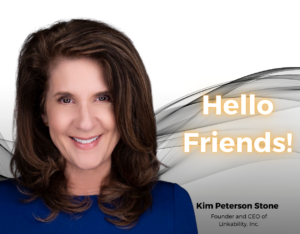
Kim Peterson Stone is a three-time founder, keynote speaker, and CEO of Linkability. With a community of more than 225,000 LinkedIn followers, she helps executives, founders, and professional service firms transform the expertise they’ve spent years building into lasting authority and more consistent business opportunities.
Over the past decade, she’s advised organizations ranging from startups to Fortune 500 companies, helping them connect referrals, speaking engagements, conferences, content, and digital visibility into one cohesive business development system that continues creating opportunities long after the initial conversation.
Her clients aren’t looking to become experts—they already are. They’re looking for a strategic way to amplify the credibility, relationships, and visibility they’ve earned while they’re busy doing what they do best.
Keep doing what you do best. We’ll help ensure the right people discover it, remember it, and reach out when the timing is right. Contact us.