We’re closing out the year energized, grateful, and inspired by the conversations that mattered most. As we look back at our posts, one thing is clear: leaders aren’t looking for noise—they’re looking for signal. The topics we saw that rose to the top this year spoke to possibility, human judgment, and real-world decision-making in complex environments. That’s not accidental. It’s a reflection of what leadership actually requires right now.
Here are the ideas that shaped the most meaningful conversations this year—and how we translate them into actionable strategies for key market leaders, global organizations and others navigating growth .

First: AI as a catalyst for human potential.
This year, we saw a powerful example of a teacher leveraging AI to help students visualize their future selves—using technology not to replace imagination, but to strengthen belief. That idea carries far beyond the classroom. When people can see what’s possible, confidence shifts and momentum follows. At the executive level, we apply the same principle through a strategic lens and experience supported scenario mapping—helping leadership teams visualize future roles, operating models, and growth paths before they exist. When the future becomes tangible, alignment accelerates, resistance softens, and AI becomes a mirror for human potential—not a mandate for change.
Second: Soft skills as the true competitive advantage.
Again and again, the most resonant conversations this year centered on adaptability, problem-solving, and growth mindset. These aren’t “nice-to-have” traits—they’re the engines of execution. Technical skills may open doors, but soft skills determine whether organizations actually move forward. We translate this insight into action through leadership clarity diagnostics and executive alignment sessions, helping teams pinpoint where communication breaks down, where accountability stalls, and where mindset limits scale. One high-performing client applied this approach and saw decision velocity increase and cross-functional trust strengthen within a single quarter. Human capability, when named and practiced, compounds.

Third: Hiring as a strategic decision—not a gut check.
One of the most revealing themes this year was how leaders think about hiring under real constraints. Every hire matters—not just culturally, but financially and strategically. The strongest signal? Leaders are prioritizing culture fit and long-term potential over immediate skills alone. The pattern is clear: hiring isn’t about filling seats; it’s about timing, cash flow, and future capacity. With our clients—from growing organizations to enterprise teams—we turn this into workforce clarity frameworks that align hiring decisions with business phase, leadership bandwidth, and what the role is truly meant to unlock next. The best decision-makers don’t just ask who to hire—they ask when, why, and to build what.
Across all three themes, the pattern is unmistakable: today’s most effective leaders are pairing optimism with discipline. They’re embracing technology without losing humanity, valuing people skills as strategic assets, and making intentional decisions that serve both the present and the future.
That’s the work. Turning insight into movement. Movement into momentum.
What a year it’s been. Thank you for building, questioning, and leading with us. Wishing you peace and blessings, see you in 2026!
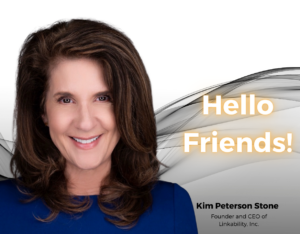
Kim Peterson Stone — three-time founder, keynote speaker, and LinkedIn thought-leader with 225 K+ followers — teaches executives and entrepreneurs how to build unshakable authority, attract targeted opportunities, and future-proof their careers through strategic LinkedIn thought-leadership. As CEO of Linkability.us, she’s helped everyone from startups to Fortune 500 teams work smarter, amplify their influence, and solve their toughest growth challenges.
Ready to become the go-to expert in your field? Let’s talk.